
← All work
11 2025 — 04 2026 · Full-time HMI Designer

Xiaomi Auto

Involved in shaping the cockpit system UI of a leading Chinese new-energy vehicle, from the domestic market to Europe.

HMI Digital Cockpit UI/UX
🔒 The nature of this work is confidential and can't be shared publicly. If you'd like to chat and learn more, please email me.
A Polaroid-style photo of Yidan Xu holding a small Xiaomi keychain during her time as HMI designer on the Xiaomi Auto team

A Polaroid from the Xiaomi Auto studio, a small team memento from the eight months I spent translating in-vehicle HMI research into eight shipped system modules, spanning the central control and rear-seat screens.

Let's make long story short

I previously served as the HMI designer for Xiaomi's automotive digital cockpit, independently responsible for the end-to-end design of eight system modules covering the central control screen and rear-seat screens, and participating in the definition and iteration of the System UI design specifications.

This experience taught me to find a design balance between speed in China, compliance in Europe, and cross-team collaboration. I typically use AI tools (Figma Make, Claude) as design accelerators: backtesting design decisions, quickly exploring possibilities, and simulating interaction logic, so one person can cover ground that would normally take several.
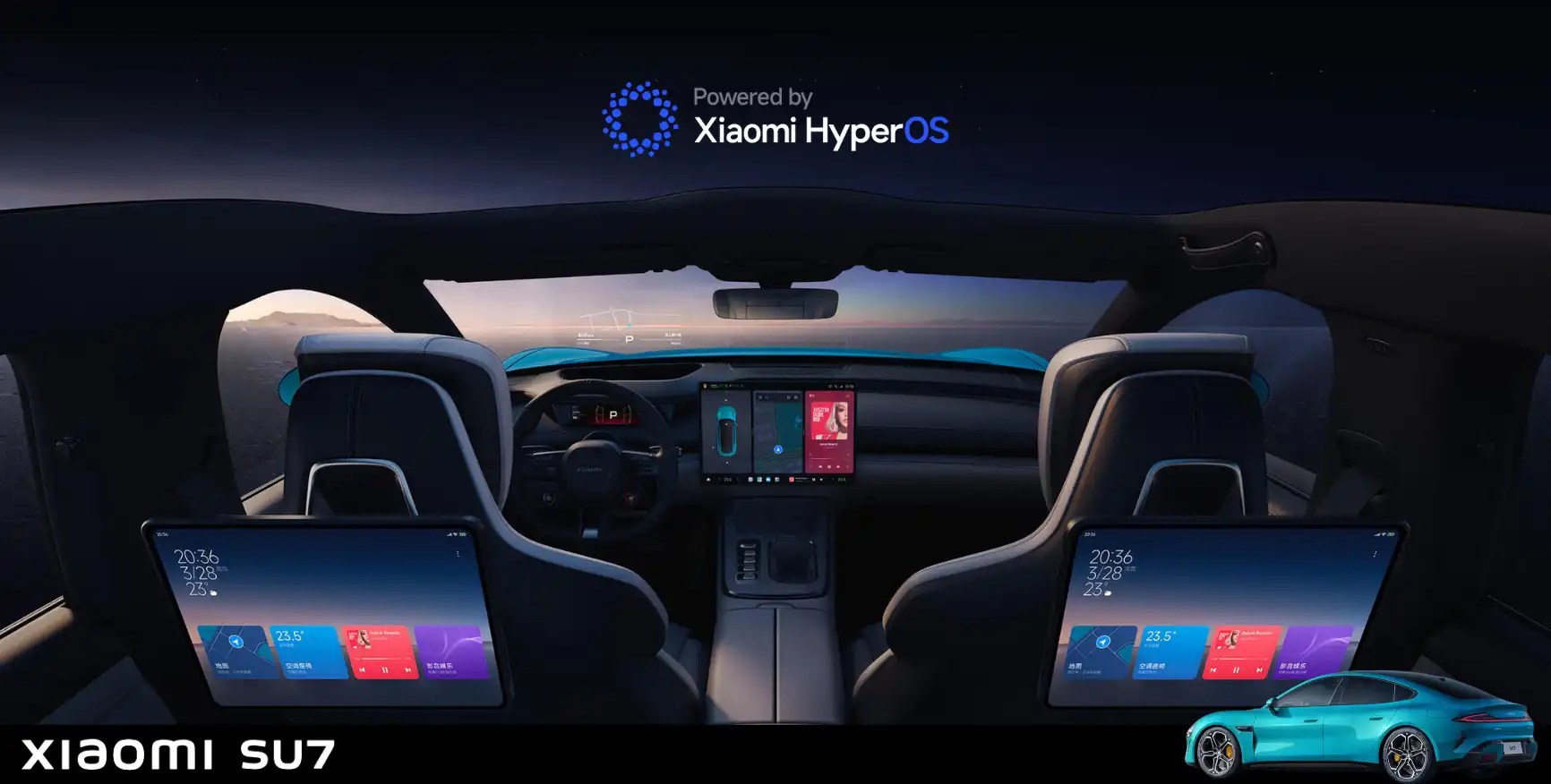
The SU7 cabin at dusk: the central control screen between the front seats, a screen mounted behind each front headrest, and the driver's cluster, all running the same interface language
The screens I worked across: the central control screen, and one behind each front seat. This is Xiaomi's own product image of the cabin, shown for context. My design work on these screens is under NDA.

The scope, in numbers

8system modules I owned end to end. Alarms, flexible desktop switching, the in-vehicle keyboard, central components, and more.
2screens in scope. The central control screen, and the rear screens behind the front seats.
2markets. China first, then Europe, which wants different things.
3external partners, including Google and the Sogou input method team.

🎨 System UI/UX design

Responsible for the design and iteration of the System UI and 8 core modules (including alarms, overseas expansion, and custom functions), spanning the central control screen and the rear screen.

🤖 AI + design workflow

Put AI into the workflow, accelerating design verification and exploration of multiple solutions through tools like Figma Make, Claude, Gemini and Lovable.

🌍 Overseas market

Led the adaptation for overseas markets, liaising with the Google UX and Android Auto teams to complete multilingual support, Google system integration, and design delivery for the German market.

👥 Outside partners

Cross-team and cross-enterprise collaboration, connecting with external partners across product and engineering to drive end-to-end delivery of the in-cabin experience.
What exactly I do
8
System modules owned independently
3
External partners: Google, Sogou, input method
2
Screens: central control + rear seats
2
Markets: China + Europe
A thesis I kept testing against

Second home, not just a smarter car

Xiaomi's whole ecosystem used to centre on 米家 (Mijia), the private home space, arguably China's best-connected smart-home system. The car extends that same thesis into a private vehicle space: not just transport, but a second home. Everything the team built toward, the ecosystem work across hardware and software, was really in service of that one idea.

On the ecosystem side, that shows up as person-car-home integration: hardware innovation across the HyperOS device family, and software that lets one account carry your settings and control seamlessly between car and home.

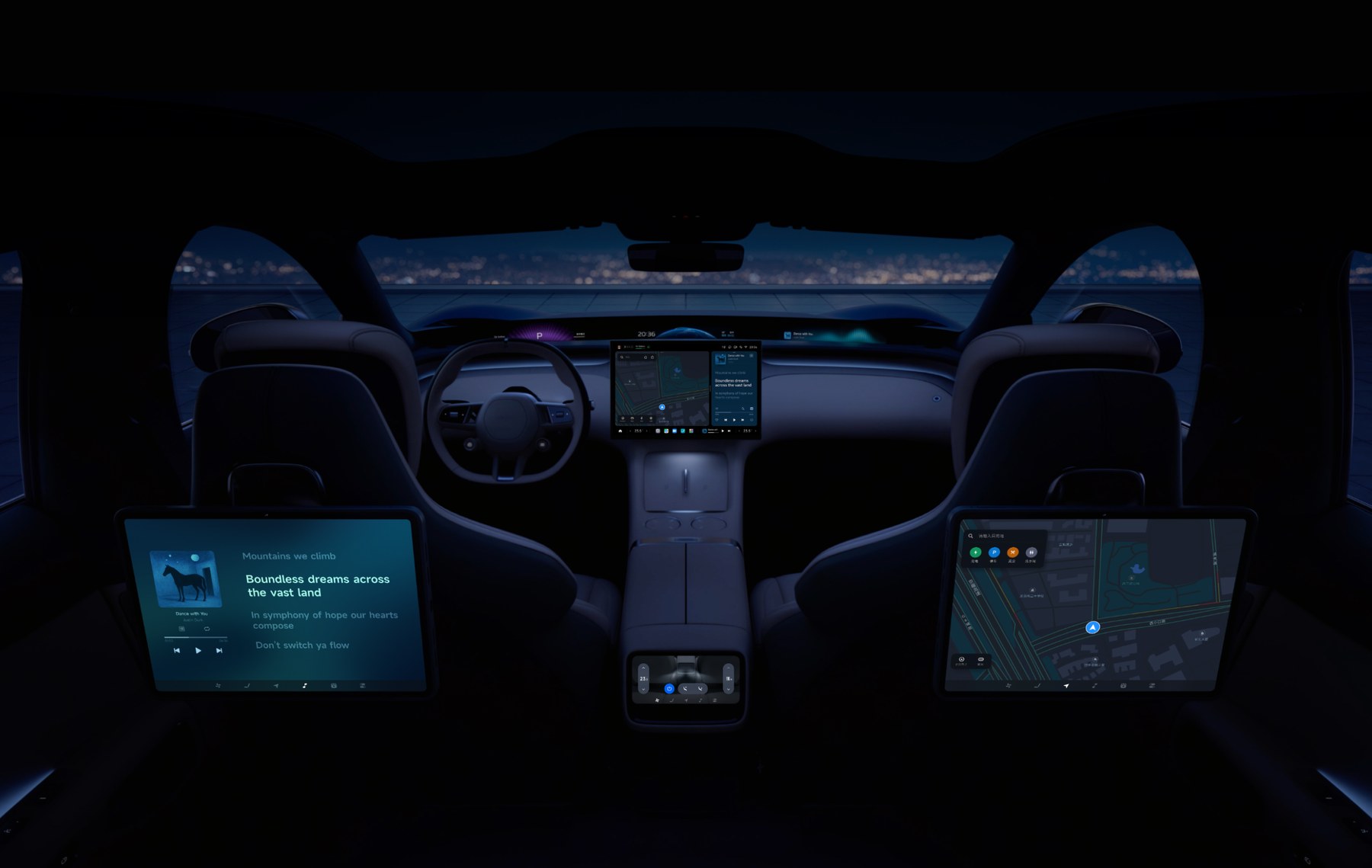
A night-time render of the full Xiaomi car cabin — the front central control screen and instrument cluster, plus two rear-seat entertainment screens showing a music player and navigation map
The full cabin: central control, instrument cluster, and dual rear-seat screens, each running its own module of the same ecosystem

What that meant for the interface I was designing

Reflection: what I learnt from Xiaomi

01 · Industry understanding: the brilliance of HMI design lies in "what you can't see"

Hardware constraints, cross-scenario consistency, and multi-vehicle compatibility, all imperceptible to users, precisely determine whether the experience is good or bad. This is something I only truly understood after working on eight modules: the hardest part of a product is often not on the screen.

02 · AI and design: a reverse-engineering tool, not a drawing tool

I'm used to using Figma Make and Claude to reverse-engineer design decisions, explore multiple possibilities, and simulate interaction logic. AI can't replace design judgment, but it lets one person do the work of three, a real leverage point in a fast-paced car company.

03 · Designer's capabilities: rigour and flexibility, using design to supplement hardware

HMI designers face hardware constraints (screen, seat, viewing distance) and product ambitions at the same time. Apple's Dynamic Island is a prime example of "using design to compensate for hardware". In the early stages of Chinese automakers, this ability was scarce.

04 · Cross-market design: switching between Chinese speed and European standards

Domestic EV users prefer a "flexible framework" style of functional density (versus Tesla's minimalist full-screen design), while the European market has strict requirements for compliance, readability and viewing-distance standards. This experience made me comfortable switching quickly between the two design languages.

Feedback

Some from the team.

"Yidan, I can really sense that you've fully grasped what we're currently covering. Your comprehension is so high that you can fully master even the business you've just come into contact with. I can tell you're now seeking out more challenging work."

— Design Mentor

"I saw big potential in you, and I'm sure you'll have a fantastic career ahead!"

— Product Manager
← Urify NFT →